Amornphat, ah-MORN-paht (the "ph" is a hard p, as in "pot", not an "f")
A child turns eighteen and finishes basic schooling. Whether they're in Bangkok, Nairobi, Rio de Janeiro or Jakarta, the question in their head that day is the one they first asked at six: what do I actually want to be?
Over those years in the classroom, they memorised thousands of facts and passed hundreds of tests. Yet no adult ever asked what they wanted to be and then waited for the answer. Adults asked the question for them, answered it for them and planned the path for them, because adults believed they knew better.
That is one important cause we can see. It isn't a lack of ability in the child, or a gap in what the school taught. A great deal of effort went into pushing the child toward a goal an adult had already picked, and that effort often doesn't work as hoped. A pushed child tends to move only while the push lasts, and may then stop, because the goal was never really theirs.
This pattern isn't limited to one country. It happens anywhere there are schools and parents who love their children.
The Rule That Fights Common Sense
This principle runs against the instinct of nearly everyone at home and every teacher, in every culture.
Don't teach the goal, show enough examples, and let the child choose.
Ask a boy in a rural village what he wants to be when he grows up, and he says a barber. Every day, walking home from school, he passes the barbershop. The barber sits and works with his hands, and he doesn't strain himself. That looks good.
The boy didn't choose wrong, and wanting to be a barber is no smaller a dream than any other. He chose from the one thing in front of him. His whole world of jobs was whatever he walked past that day. If he had seen a hundred different working lives and still chosen barber on his own, the method would have worked perfectly. The problem was never what he ordered. It was the number of items on the menu in front of him.
Here is what the rule does. It doesn't tell a child to become a doctor or an engineer because those jobs are stable or respected. It opens the world so the child can see everything a person can be, and lets the child decide which picture looks like them.
How It Actually Works
It works in five steps (see the five-step picture at the top of this page), and each one has to connect properly for the next to work. When the drive comes from inside, the skills the world asks for today (reading AI well enough to catch its mistakes, thinking things through, creating, reading other people, language) are expected to follow on their own, because the child wants them, not because they were told to.
Most people at home try to skip straight to the last two steps: plant the motivation, drill the skills. They never go through the first three. That's building a house with no foundation.
What This Looks Like, In Practice
In practice, the principle becomes a routine simple enough to remember in one sentence:
One documentary a day, from kindergarten through the end of secondary school (ages 3 to 18). Follow the suggested time each day and it adds up to about 3,000 hours of real life.
How long "one documentary" lasts grows with the child. It isn't a fixed length for fifteen years. The times in the diagram are suggestions, not targets you have to reach:
Some days a child will watch less because they are tired, can't concentrate, or the film just doesn't appeal. That's fine. Stop, and watch again tomorrow. A shorter time every day still helps, because what helps a child is watching consistently, day after day.
If an older child loves a film and wants to see it through to the end, going over the time in the diagram is fine.
For kindergarten children, we suggest staying within the time in the diagram, and taking a break whenever the child doesn't want to go on.
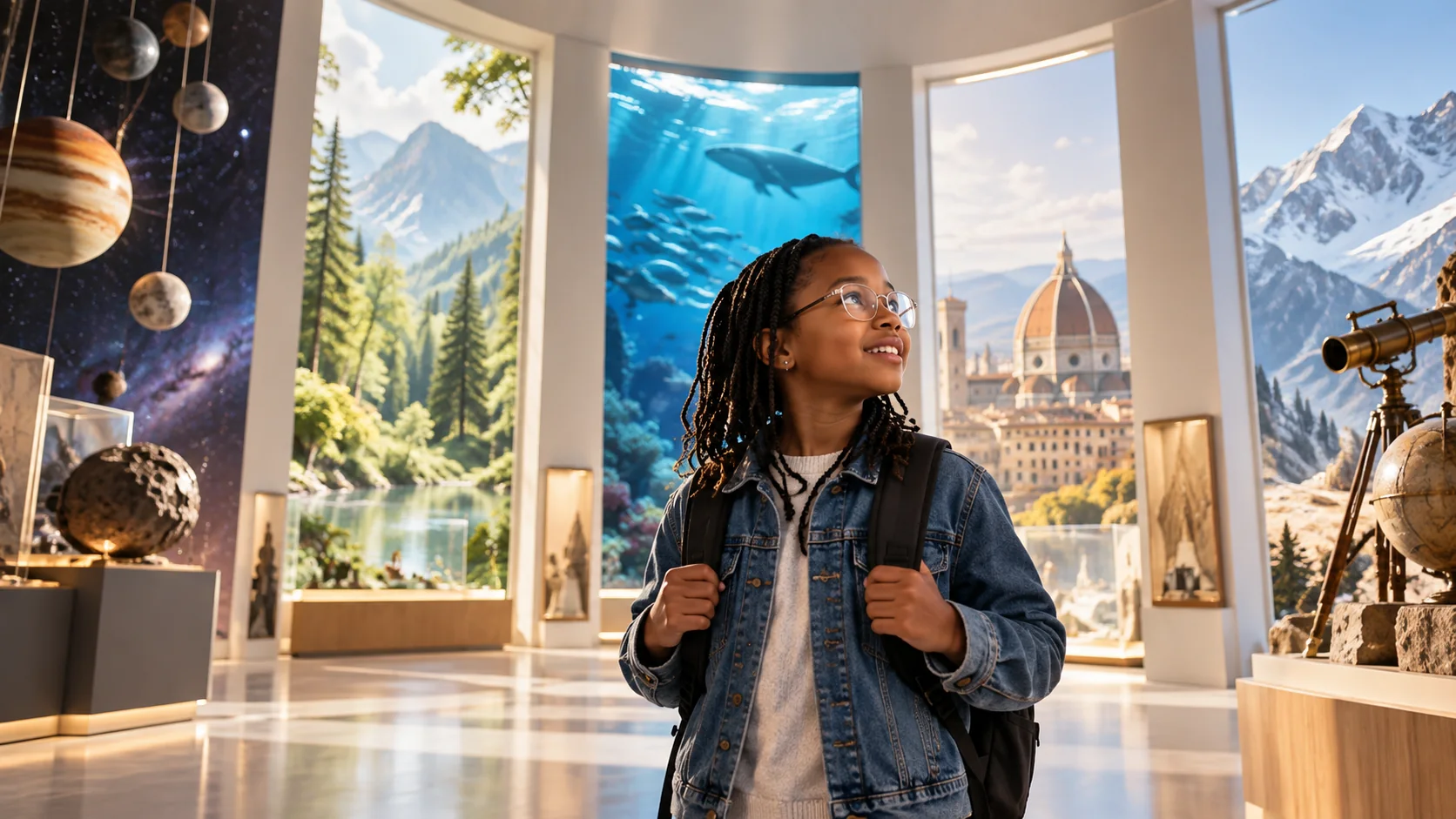
Why documentaries, and not cartoons or general entertainment? A documentary is a window onto real life. A child watching one sees real people do real work, solve real problems and live real lives in a wide range of roles. That is the raw material for the first step above.
For ages 3 to 6, slower, calmer footage that a child can follow suits how children that age develop, and the content matters even more than the pace. So the Amornphat Method chooses films with slow, calm, natural footage and gentle content, designed to follow the guidance the American Academy of Pediatrics (AAP) and the World Health Organization (WHO) publish for children this age. This is because it fits how a child that age develops, not to prevent any illness.
Note: This content is provided for general informational purposes only and does not constitute medical advice. It is not a substitute for guidance from a qualified paediatrician or child development professional. If you have concerns about your child's development or behaviour, please consult a doctor directly. Screen-time guidance on this page references the general public guidance from AAP and WHO for children aged 2-5 (up to 60 minutes/day across all screens combined). The suggested Doxzilla Learning viewing time is intended as part of — not in addition to — that overall daily allowance. References to AAP and WHO on this page refer to their publicly published general guidance and do not imply that AAP or WHO has reviewed, endorsed, or is affiliated with Doxzilla Learning or the Amornphat Method.
This Works Anywhere In The World
This method is free for anyone to use. Find documentaries from any source in your own country, as long as they meet the four checks below. There is nothing to buy. What we want to pass on is a principle, not a business. This is the main path here, not a fallback.
Choosing documentaries for a child: four checks
This method asks a child to watch one documentary a day, every day, from age 3 to 18. What the child watches matters as much as the watching.
Find documentaries anywhere. Make sure each one has all four of these.
Curated Content
Someone chose this documentary for children, and can tell you why. A child who walks past one barbershop every day knows one job. Documentaries chosen on purpose, from many kinds of work and many parts of the world, make that picture bigger.
Ask: who picked this one, and why?
Age Classification
The documentary says which ages can watch it and what to know first, such as which films suit young children and which are better left until a child is older. A label helps you choose faster, and it helps most when you have no time to watch first. But if the child is under 9, please skim the whole documentary first.
Ask: was this label made for this documentary, and did the person who made it actually watch it?
Fact Check
Someone has checked that what the documentary says is true, and says plainly what could not be checked. A child builds a picture of what's possible from what they see. If what they see isn't true, the picture isn't either.
Ask: who checked it, and is it someone other than the people who made it?
Trust
You can tell who stands behind it, who pays for it, and who to tell if something is wrong. This method asks you to step back day after day, for years, and that only works with a source you can rely on.
Ask: can I find a name I can contact, and what happens if something is wrong?
If all four are there, press play. If one isn't, try another.
A convenience option, not a required step. If you can't find documentaries that meet all four, we've prepared them at Doxzilla Learning (doxzilla.com/learning), which follows these four standards. Sign-up details are on that page. The method itself works anywhere, with or without it. Doxzilla Learning is a different site from amornphat.com, which is where the method itself lives.
This section is general information, not part of a commercial offer.
The gap between children in big cities and children in remote areas repeats across many countries. It shows up wherever a big city pulls opportunity toward itself, and wherever parents have to leave home for work elsewhere and entrust their children to relatives. City children often have more access than remote children to museums, exhibitions, field trips and a wide range of working adults. In Thailand's case, where the data can be checked, the 2015 PISA results found that students in Thailand's urban schools scored clearly higher in science than students in its rural schools (a figure before adjusting for family income). By the OECD's own conversion, a gap of that size is equivalent to more than a year of schooling (source: PISA Thailand, IPST, in Thai).
Documentaries are one of the few learning resources that cost roughly the same to deliver to a remote village as to a big city. A good teacher, a museum or a lab all require moving people, buildings and real equipment to the location, and the farther away it is, the more it costs. Digital content has no such limit. The internet and screens already reach most of the world's population, and that reach keeps growing. What hasn't arrived is quality content, because a good deal of what's there is aimed mainly at entertainment. This method fills exactly that gap between the infrastructure that has arrived and the quality content that hasn't.
Documentaries in a Child's Own Language
This method is free, and anyone can follow it. But documentaries aren't available equally in every country. Children in some countries can find enough in their local language. Children in many countries have almost none in their local language.
If there's nothing to watch in a language a child understands, the word "free" means nothing. Documentaries in every child's local language are work we can only do together. If you make documentaries, translate them, or want to see them made in the local language of your own community's children, you are invited to help produce them, so that every child has enough to watch in their local language.
We Are Not the First to Think This
This method began in my father's house. Read his story.
The idea closest to this method is the Suzuki Method, created by Shinichi Suzuki (1898–1998), a Japanese violinist and music educator. Decades ago he proposed that children learn music the way they learn their mother tongue, through repeated exposure in a prepared environment, not through some talent they were born with. The Amornphat Method swaps the ear for the eye, and musical sound for real life on screen. The underlying principle is similar.
Maria Montessori (1870–1952), the Italian physician who founded the education system that carries her name, followed the same principle: prepare the best possible environment, then follow the child rather than push the child down a path an adult already chose.
Akira Miyawaki (1928–2021), a Japanese botanist, invented a way of planting forests that, as its originator reports, grow faster and denser than conventional methods. His method has since been used in many countries.
All three trusted a well-prepared environment over direct teaching or force, and their ideas are now used around the world. The Amornphat Method stands on that same ground, in a different field. You can read more about all three on the Inspiration page.
What We Will Keep Studying
Each of the five steps above can be tested and challenged, and shown wrong if it's wrong. That's what separates this from an ordinary belief. One question we want to keep studying is how far time spent on quality documentaries takes the place of time spent on passive social media.
Reading AI well isn't a skill you can teach directly. It's a side effect of having enough knowledge to notice when something is wrong. A child who knows nothing about volcanoes has no way of telling that an AI got a volcano fact wrong. This is the "don't teach the goal" rule applied another way: don't teach a child to distrust AI. Give them enough real knowledge and the right kind of doubt shows up on its own, because knowledge has to come first before arguing with AI is worth anything. Another question we want to keep studying is whether watching documentaries helps children judge what an AI tells them.
This document exists to lay out the principle clearly, invite families and schools to try it, and invite any researcher who is interested to study it alongside us.
The Purpose Behind This
The purpose of this method isn't to keep anyone from ever leaving home. It is to stop opportunity depending on where a child happens to be born. A child in a village with no museum, no science centre and no one in the family who has ever done the job they dream about deserves the same chance of growing into it as a child born in a capital city. Leaving home isn't the problem. The problem is being forced to leave because no other choice is left. Moving because you chose to and moving because you had nothing else are two completely different things.
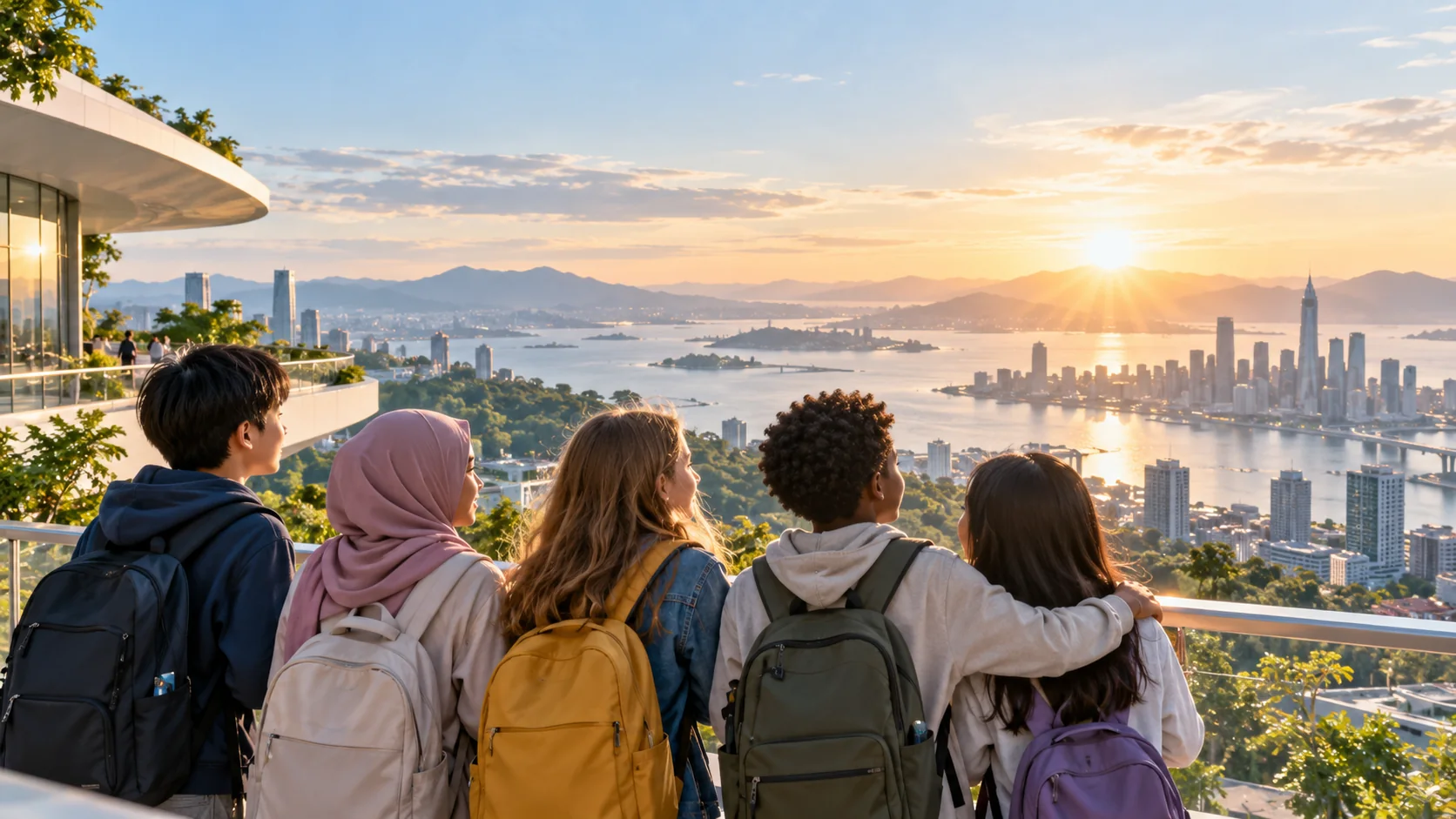
A child who knows what they want to be from an early age isn't just a happier child. They may grow into a worker with direction, an entrepreneur with an idea, a citizen who takes part. Research by the Nobel-winning economist James Heckman and colleagues suggests that investing in a child's development early in life tends to return more to society and the economy than the same investment made later. The earlier you reach a child, the higher the long-term return. That research looks at investing in early childhood as a whole. The picture above of a child who knows what they want to be builds on those ideas. It is not a result the Amornphat Method has proven.
Start Tomorrow, At No Cost
This method doesn't wait for any Next Step product or platform. You can start today, with whatever phone or computer your household already has.
Day one. Pick one documentary that is right for your child's age and meets all four checks (see the four checks above). Watch it together. Then ask one question: "What did you see someone doing today?"
Where to find documentaries for free. Look for four things in any documentary you choose for a child: Curated Content, Age Classification, Fact Check and Trust. You can find one anywhere. Just make sure all four are there. You don't need Doxzilla Learning for this, and there is no subscription or payment.
Start at your child's actual age. Use the suggested times in the diagram above as a starting point, then adjust to what holds that child's interest. There's no fixed formula. A child under 6 always has someone sitting with them, and young children do best with films that have slow pictures, soft sound and a gentle feel. The details are on the At Home page.
How do you know it's working? Watch for the child bringing up what they saw without being asked, asking follow-up questions about it, or starting to talk about what they "want to be" in their own words. This isn't a result you'll measure in a week. It builds up one day at a time.
A child who chooses their own goal is more likely to walk to it on their own.